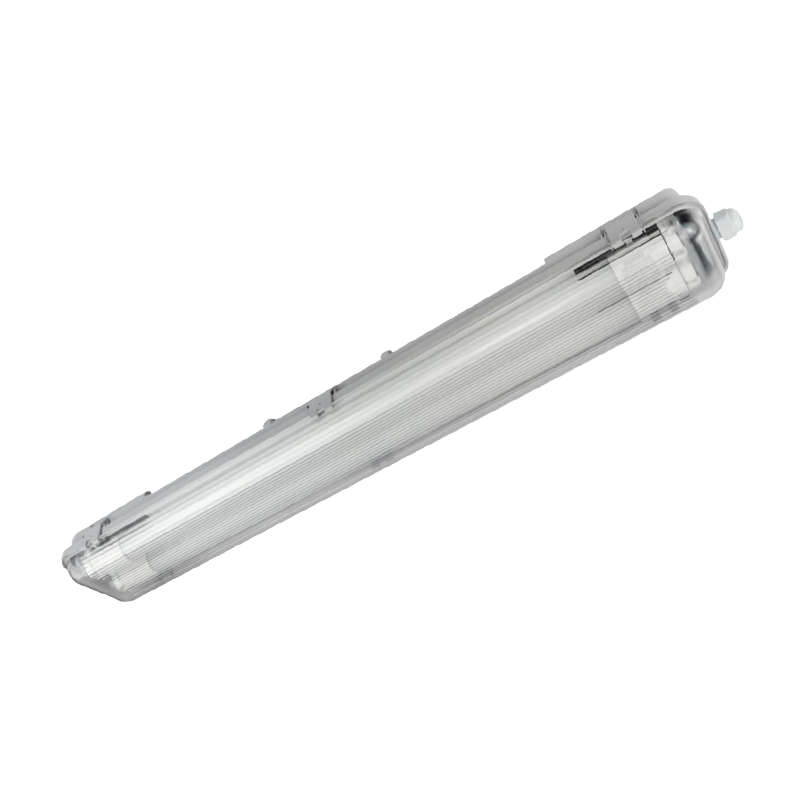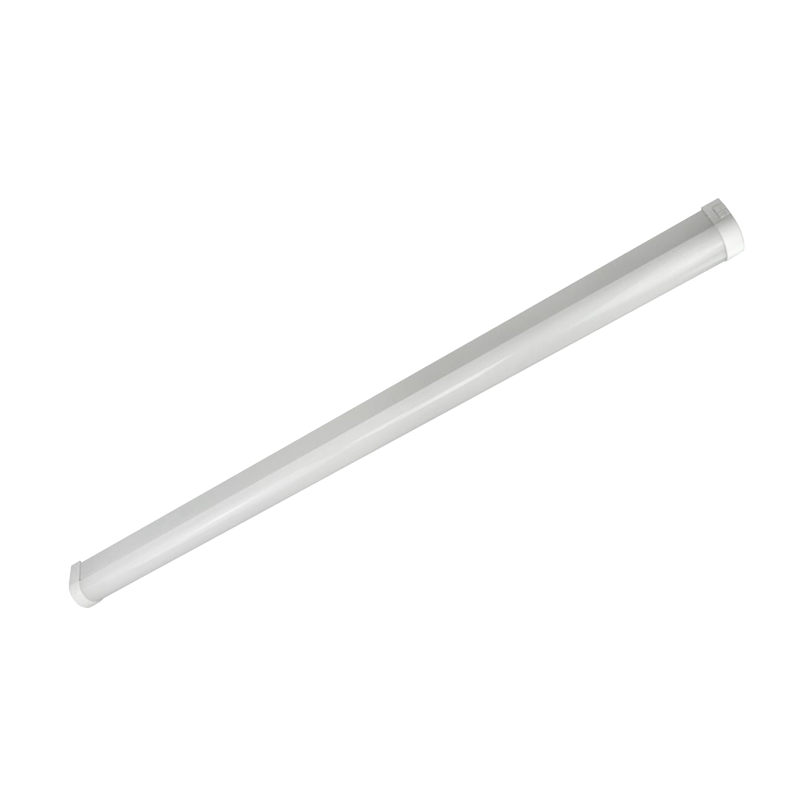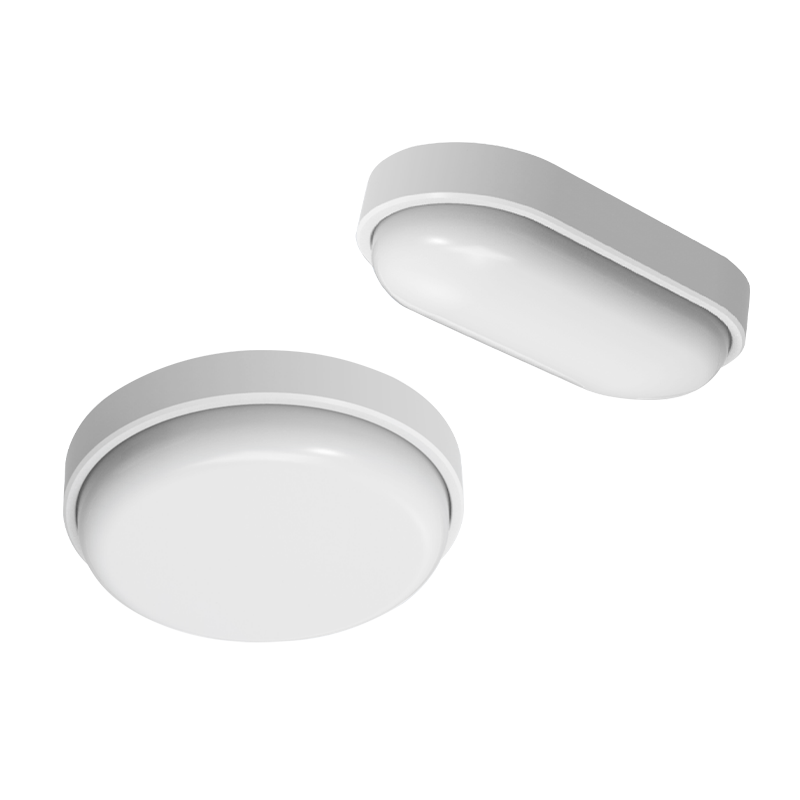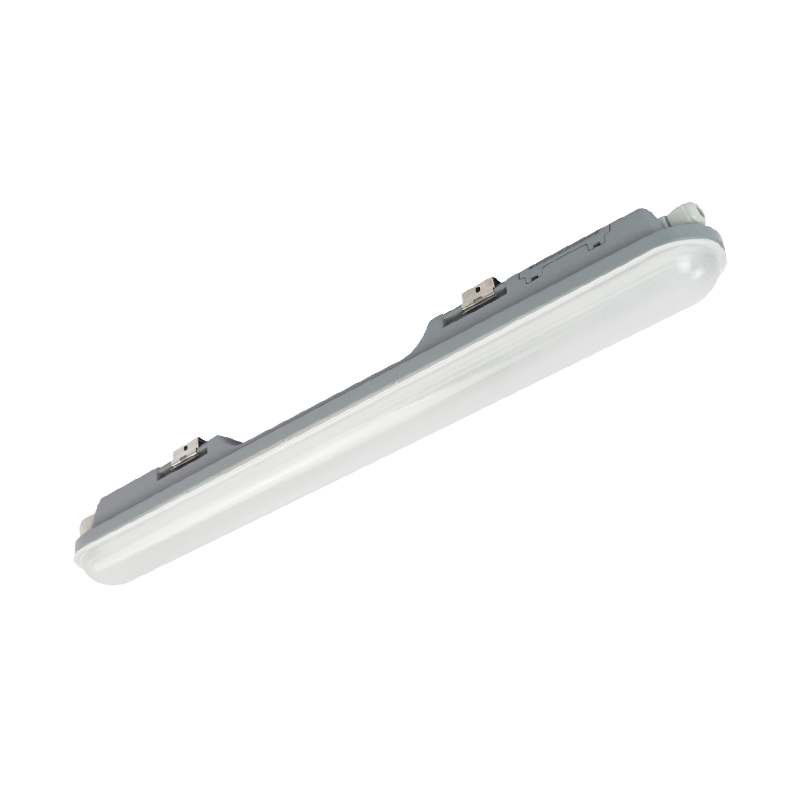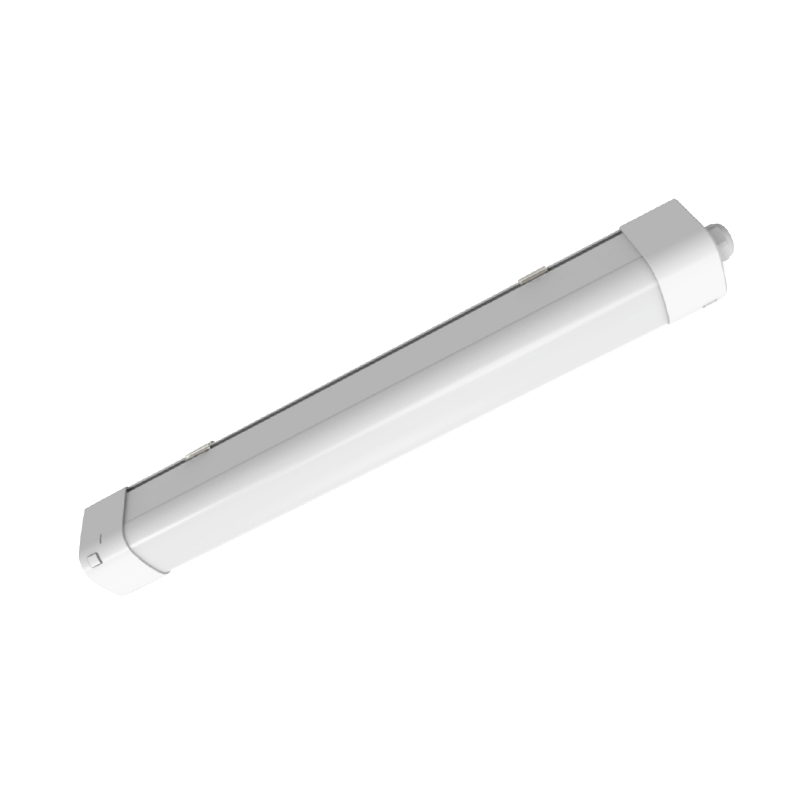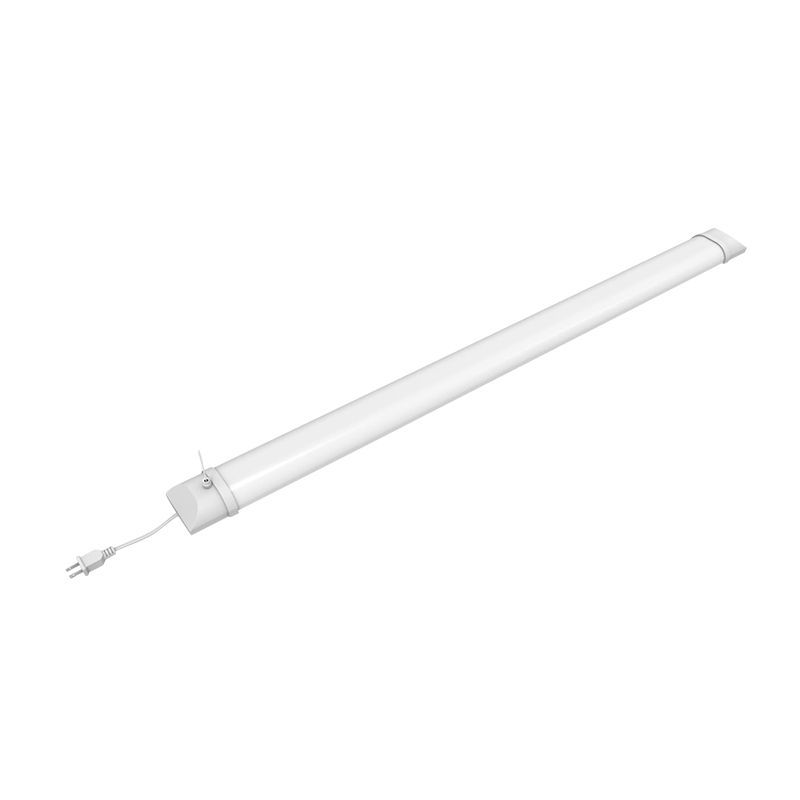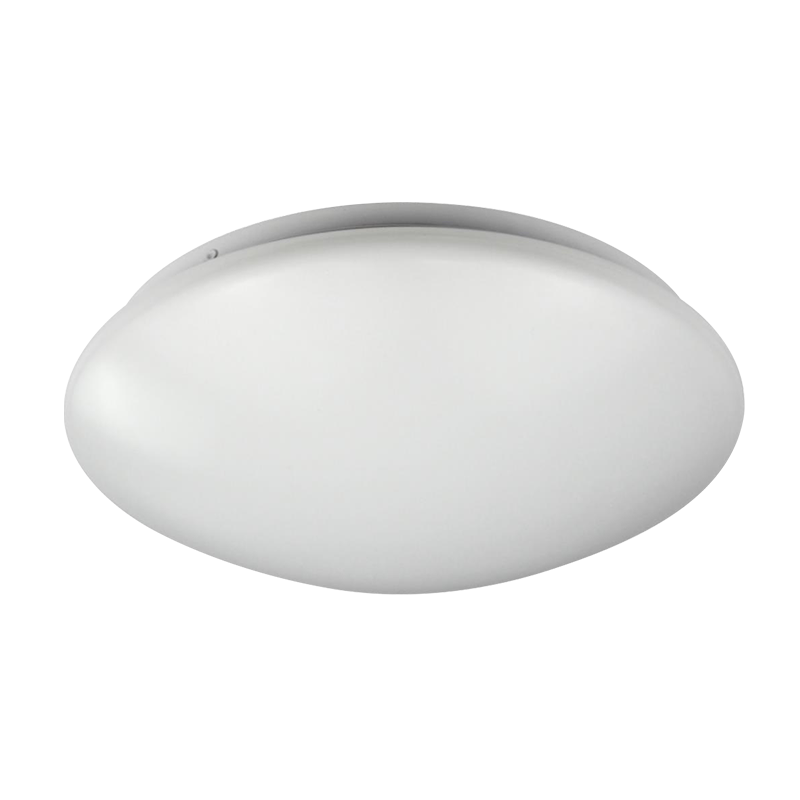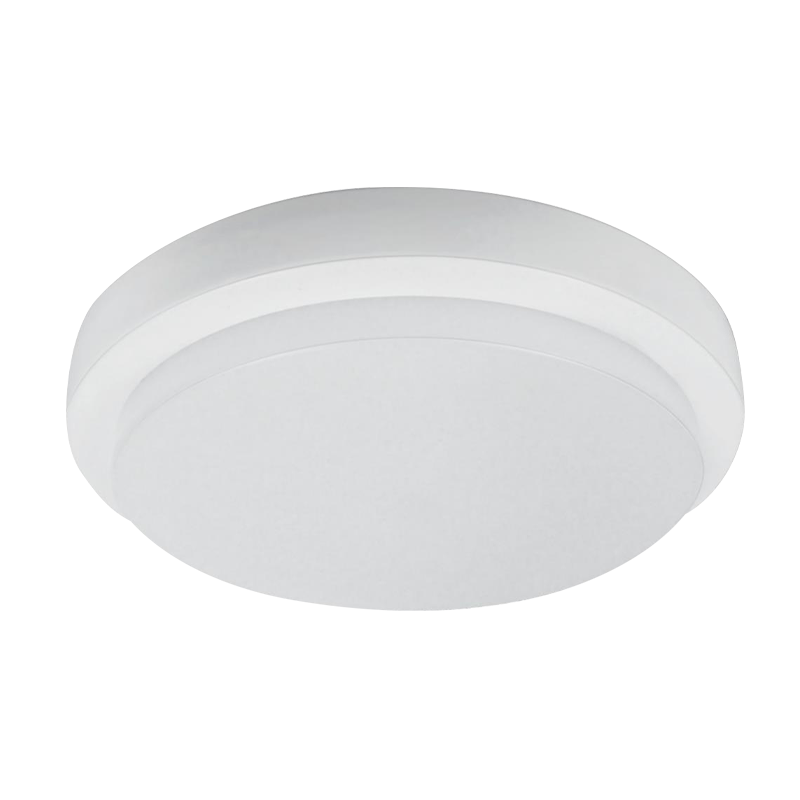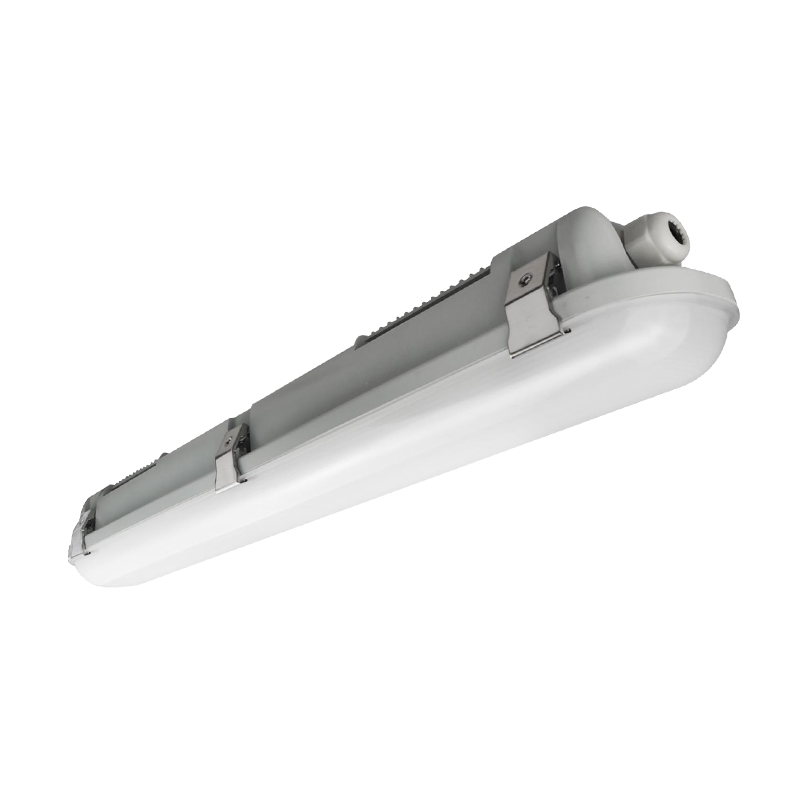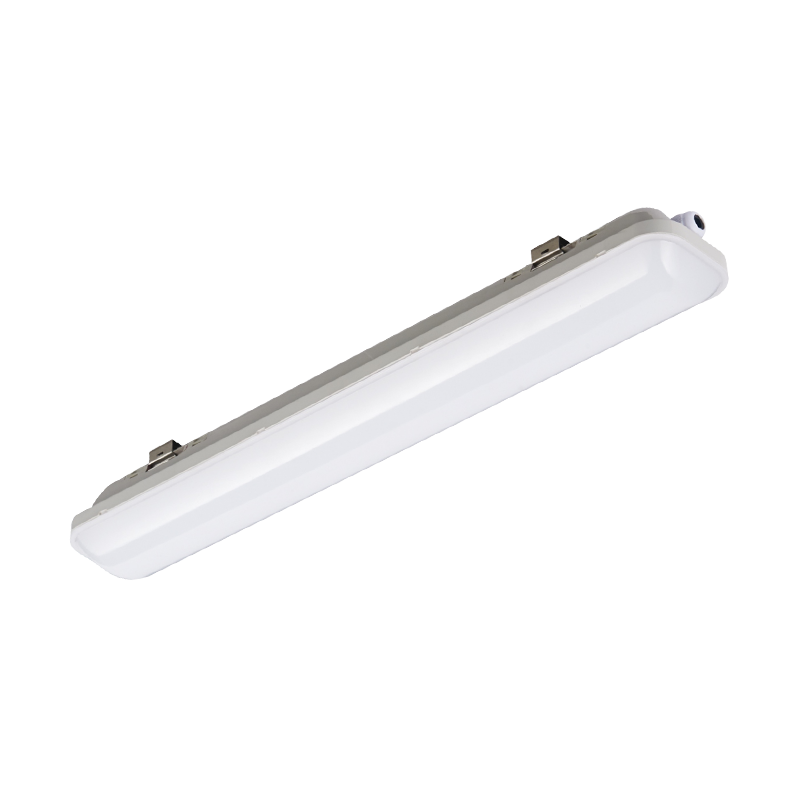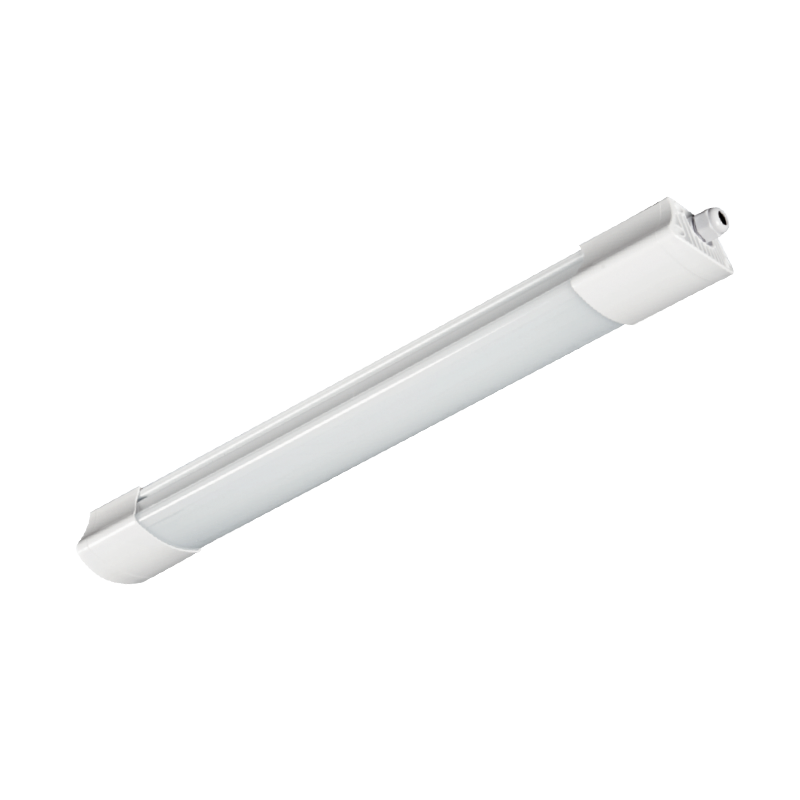


Specify a power supply for a fixed luminaire and constant current is almost always the correct answer. Tri-proof lights, panel lights, batten fittings, ceiling lights and bulkheads each carry a series string of LEDs inside the housing. That string needs a locked current, with the voltage floating inside the string's forward-voltage window. Constant voltage — normally 12V or 24V — belongs to LED strips, decorative modules and any parallel arrangement that already carries its own resistors or constant-current IC.
Getting this wrong is not a vocabulary problem. A 24V CV supply wired to forty LEDs in series either refuses to light them or pushes the string past its rating within minutes. A CC driver connected to a 12V strip climbs to open-circuit protection, flashes once and stays dark. Both mistakes look harmless at quotation stage and become field failures three months later, usually in the first batch that ships to a project site.
The rule that survives real projects: read the load structure before reading the driver label. A single series string means constant current. Several parallel branches that each limit their own current means constant voltage. Everything after that is parameter confirmation on top of a decision that has already been made for you by the luminaire design.
A CV LED driver is a stabilised DC supply. It converts 90–305V AC into a steady 12V or 24V output and lets the load decide how much current flows. LED strip is built in 3-LED or 6-LED sections with resistors or an IC in each section, so a single 24V output can feed a five-metre reel, a ten-metre run, or several runs in parallel without any change to the driver.
Three things go wrong with CV systems at scale. The first is line loss: on a 24V strip, a ten-metre run can lose more than 8% of its voltage by the far end, which reads as a visible brightness step; on 12V the same run is worse, which is why 12V is usually capped at five metres per feed. The second is current sharing: resistor tolerance, solder quality and cable length all shift branch current, and a branch rated at 0.5A quietly running at 0.7A is common in installations that were never measured. The third is headroom: CV supplies are normally loaded to about 80% of nameplate power so the remaining capacity can absorb inrush and thermal rise.
If a CV system is going into a commercial ceiling or a linear feature, count the total connected load first, add the 20% reserve, then check the voltage drop on the longest run. The order matters. Skipping the drop calculation is the single most common reason a finished installation looks patchy even though every component tested fine on the bench.
LED brightness follows current, and forward voltage follows junction temperature. In the same production batch, a die that drops 3.0V at 25°C may drop 2.8V at 85°C. Hold the voltage fixed and the current climbs as the junction warms, which raises the temperature further, which lowers the voltage again. That is a feedback loop that ends with a dead LED and a warranty claim. A CC driver reverses the logic: current is locked, voltage follows the string, and temperature drift is absorbed by the voltage instead of the current.
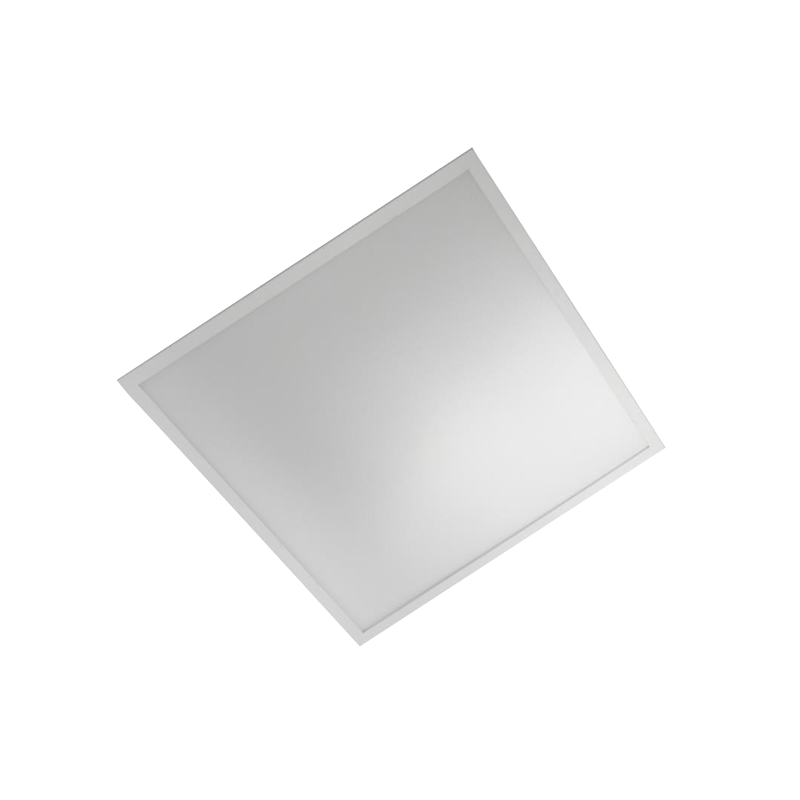
A practical example. A 600 × 600 panel light uses 24 LEDs in series, rated 3.0V at 300mA. The full string drops roughly 72V at 25°C, but across temperature and batch variation the string may sit anywhere between 67.2V and 74.4V. The driver therefore needs a constant 300mA output with a voltage window covering 67–76V. Choosing a fixed 72V supply instead means the lamp may fail to start when cold and may over-current when hot, and neither fault appears during a short factory test at room temperature.
One point that catches people out on multi-string boards: the driver current is the total for all strings, not the current per string. Two strings running at 150mA each need a single 300mA driver, not two 300mA drivers, and not a 150mA driver feeding both.
The table below is the version engineering and purchasing teams actually use, because it puts the consequence of a wrong choice next to each parameter instead of restating the definition.
| Comparison point | Constant current driver | Constant voltage driver |
|---|---|---|
| Controlled output | Current fixed, voltage floats | Voltage fixed, current set by load |
| Typical output | 300–1050mA, voltage window varies by model | 12V or 24V, occasionally 5V or 48V |
| Load wiring | One series string, or several identical strings in parallel | Multiple parallel branches with built-in current limiting |
| String voltage drift | Absorbed automatically by the driver | Must be handled by the load side |
| Effect of cable drop | Minor; current is identical along the string | Significant; far end is dimmer than the near end |
| Dimming behaviour | Good linearity down to low levels | Low-voltage side dimming, driver and dimmer must match |
| Typical failure | Window mismatch causes start-up failure | Uneven branch current causes local overheating |
| Common applications | Tri-proof lights, panel lights, battens, ceiling lights | LED strip, decorative modules, cuttable tape |
The last row is the one that gets skipped. A CV supply driving a rigid LED board will light up on the bench and pass a five-minute check without complaint. It is 500 hours into an ageing test, when the highest-current branch has already started to darken, that the decision shows up as a customer complaint rather than an engineering note.
Open a driver datasheet and three figures decide whether the part is usable at all. Everything else — efficiency, package size, connector type — is refinement on top of those three.
The window must cover the string under every condition. The lower limit decides whether the driver can strike the string from cold; the upper limit decides whether it drops into protection when the LEDs run hot and their forward voltage sags. A workable method: minimum die voltage multiplied by the number of LEDs in series gives the bottom of the window; maximum die voltage multiplied by the number of LEDs plus 5% for cable loss gives the top.
Current must equal the board rating, not approximately equal it. Running a 300mA board at 350mA buys roughly 15% more light and costs a large slice of lifetime — the curve moves from a 50,000-hour class to something closer to 30,000 hours. Running under-rated current is just as bad commercially: the lumen figure on the specification sheet is no longer met, and the approval test fails on the customer's own bench.
Drivers last longest between 80% and 90% of rated power. At full load the electrolytic capacitors run hotter, and capacitor life roughly halves for every 10°C rise. A 40W fixture paired with a 48W driver usually survives longer on site than the same fixture on a 40W driver, and the cost difference is often under 8% at typical volumes.
Driver efficiency sets both heat and running cost. For a 100W output, an 85% driver burns about 17.6W internally; a 92% driver burns about 8.7W. Put 400 fittings in a warehouse running 12 hours a day and the difference is roughly 8.9W × 400 × 12 × 365 ÷ 1000, about 15,600 kWh a year. At 0.10 USD per kWh that is close to 1,560 USD annually, which is normally far more than the purchase premium on the better driver.
Typical ranges for commercial LED drivers; always confirm the figure against the supplier datasheet at the actual load point.
A power factor below 0.9 is increasingly difficult to pass on larger projects. EU ERP and US DOE rules both set PF requirements above 25W, and tender documents usually state PF ≥ 0.9 outright. Active PFC adds cost, but above 50W it is effectively standard rather than an upgrade.
Excessive ripple current shows up as flicker on camera long before anyone notices it by eye. Once ripple exceeds about 10% of the output current at 100Hz, high-speed video and conferencing spaces can pick it up. For sports lighting, broadcast studios and examination rooms, specify below 5% and ask for the measurement, not just the claim.
When you are checking these figures against a specific model, compare the published curve rather than the headline number. Efficiency at 100% load is rarely the efficiency you will actually run at in a real installation.
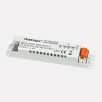
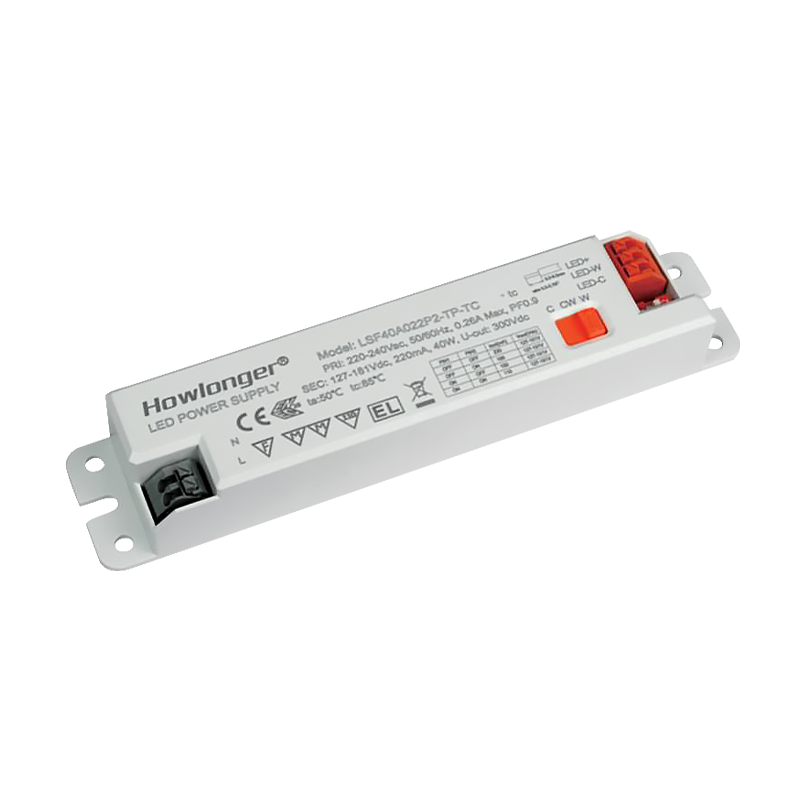 LSF-A-P2 15W–70W LED Power Supply SeriesSix models from 15W to 70W list output current, voltage, efficiency and dimensions, helping match a driver to the installation’s load and curve.View Product →
Dimming selection has a fixed order: control system first, compatible driver second, luminaire appearance third. Work the other way round and you usually end up redesigning the board or buying a driver that cannot be dimmed below 30%.
Wiring details, minimum-load behaviour and compatibility caveats for each protocol are covered in our note on how common dimming protocols work on LED battens and drivers. Read that before locking a driver into a project specification, because changing protocol later usually means changing hardware.
One practical warning: a driver that dims smoothly on the bench can still flicker in a room with a shared neutral or a long control cable. Always test the driver and the control gear together, as a pair, not as two separate approvals.
These are the patterns that come back from installers, and each one points at a specific mismatch rather than a general quality problem.
Every one of these is cheaper to prevent at specification stage than to fix after installation. The check sequence is always the same: string configuration, voltage window, current setting, ambient temperature, control method.
Industrial tri-proof housings usually run a single series string inside a sealed body, so the driver has to tolerate high internal temperature and, in wash-down areas, humidity. IP65 or IP67 rated CC drivers with a wide case-temperature rating are the norm, and the voltage window should be checked at the highest expected internal temperature rather than at room temperature. A driver that starts reliably at 25°C can fail to strike at 55°C inside a sealed aluminium profile.
Linear fittings are the category where CV and CC both appear, because some designs use a fixed 24V internal rail and others drive a CC string directly. Confirm which architecture the fitting actually uses before ordering spare drivers. The two are not interchangeable, and the connector pinout often differs even when the housing looks identical from outside.
Panels are almost always constant current, with the driver mounted in the rear housing or in a remote box. Because panel boards run at relatively low current spread over a large area, tight current accuracy and low ripple matter more than raw efficiency. Our note on which flat panel designs suit constant current drivers goes into the board-level detail for backlit and edge-lit constructions.
Small domestic and commercial fittings often use an integrated driver, but replaceable-driver designs are becoming more common because they simplify warranty handling and spare-parts logistics. If the fitting is rated for a replaceable module, match the replacement driver's connector and voltage window exactly. A near-match will fit physically, power up, and fail electrically within a few months.
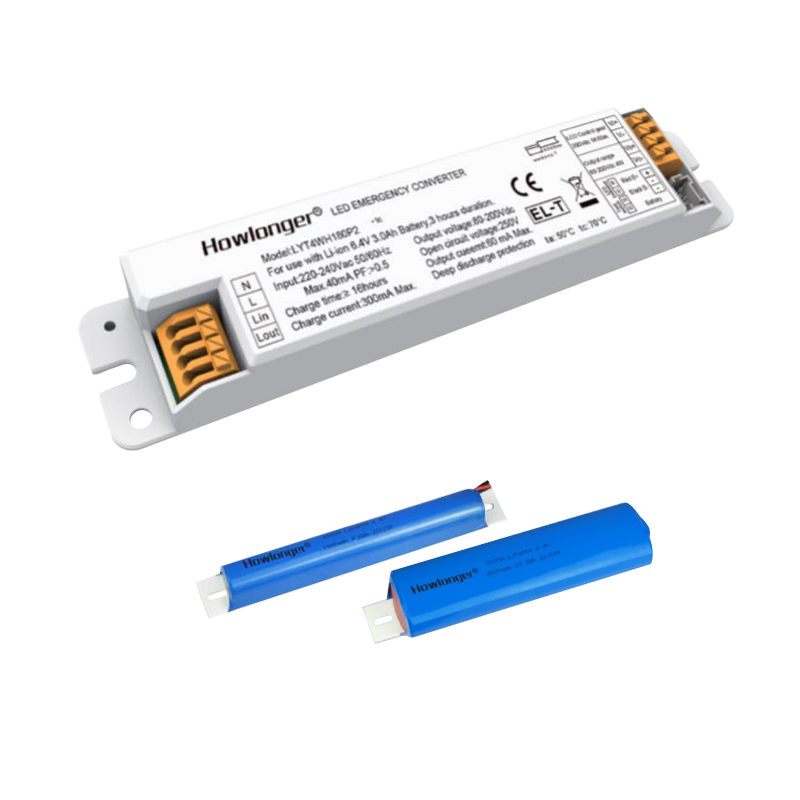
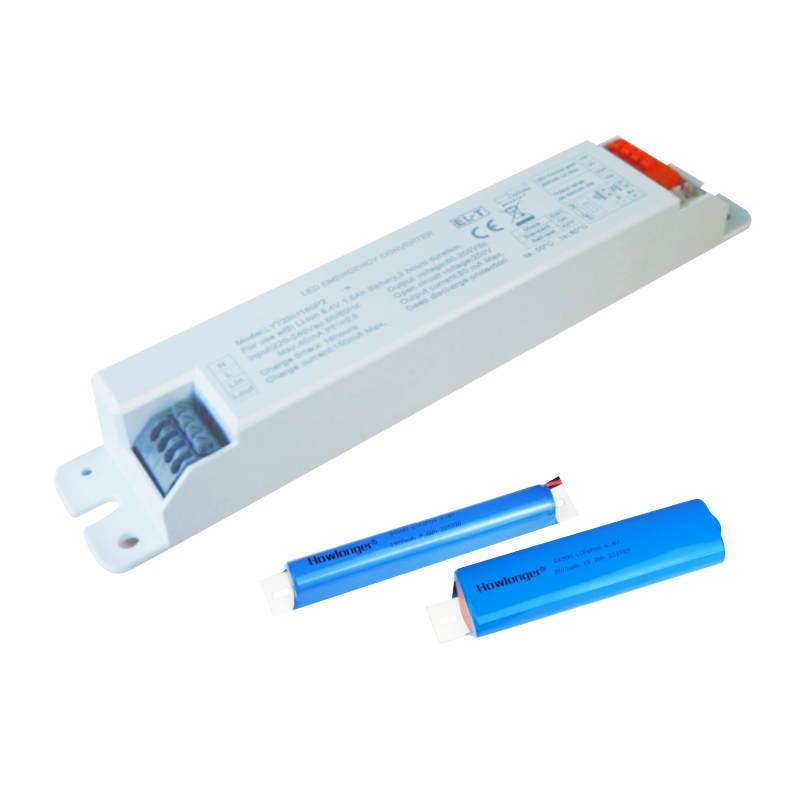 LYT-B-P2 Ultra-Thin LED Power Supply for LampsCheck the 12 model variants for output-voltage range, wattage, battery capacity and 90- or 180-minute duration before matching a lamp fitting.View Product →
A datasheet match is a starting point, not a qualification. Batch consistency is where most sourcing problems appear, and it is worth asking any supplier which tests the driver actually goes through before packing rather than which certificates it holds.
Ningbo Longer Lighting operates TUV and SGS witnessed laboratories and participates in two national standards and seven group standards, which is why incoming driver batches are compared against logged curves rather than a single pass or fail reading. The company holds 123 patents across its lighting and power supply ranges, and the power supply line covers a broad set of output configurations so a fixture platform does not need a completely new driver design for every variant.
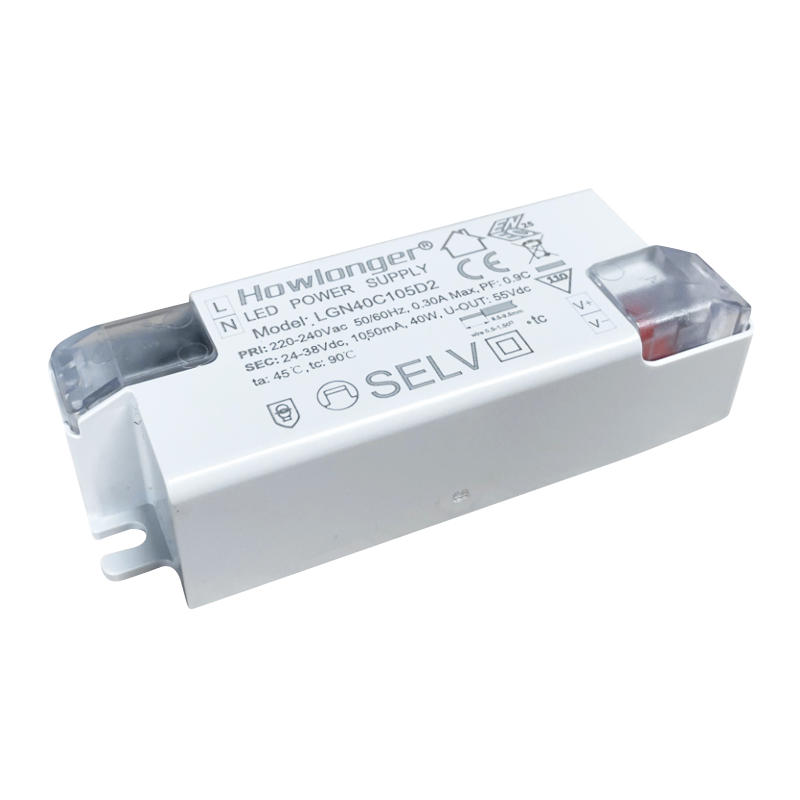 LGN-C-D2 21W–40W LED Power Supply SeriesTwelve models cover 21W–40W with 500–1050mA output and a three-level DIP current adjustment, useful when matching a luminaire’s string configuration.View Product →
Take a 1200mm tri-proof luminaire with 48 LEDs arranged as two parallel strings of 24 in series. Each string runs at 150mA.
The whole calculation takes about ten minutes and removes most of the guesswork from the quotation. It also gives the supplier a precise brief, which shortens sample turnaround considerably and cuts the number of iterations from three or four down to one.
Most sample rounds stretch out because the first enquiry leaves out parameters the supplier cannot guess. A complete brief covers the following.
With those nine points on paper, a supplier can quote a specific model instead of a range, and the sample you receive is the sample that will go into production. That alone usually saves a full development cycle.
Not directly. Strip is built as parallel sections that already limit their own current, so it needs a fixed voltage. A CC driver will keep raising its output voltage looking for its set current, and that usually trips protection or damages the first section on the reel.
Only if the board has its own current-limiting circuit on every branch. A bare series string on a CV supply draws whatever current the voltage allows, and that number rises as the LEDs heat up.
Choose 24V unless the strip or module is only available in 12V. At the same power, 24V carries half the current, so voltage drop and cable heating are markedly lower on long runs and the installation tolerance is wider.
Do not use it. Over-driving gains light output in the short term and shortens life, and the lumen and warranty figures on the datasheet no longer apply. Select a driver whose set current equals the board rating, then adjust brightness through dimming if needed.
Only when the fixtures are wired as parallel strings of identical configuration and the total current matches the driver rating. Mixed fixtures on one driver will not share current evenly, and the brightest one usually fails first.
Driver life is dominated by the electrolytic capacitors and the case temperature. A unit running at 60°C case temperature typically reaches a 50,000-hour class; the same unit at 70°C will not. Mounting position and housing ventilation matter as much as the brand printed on the label.
It is decided by the installation location, not by the driver type. Indoor dry ceiling voids take IP20; wash-down areas, tunnels, canopies and cold stores need IP65 or IP67 with potted construction and a condensation check.
Yes. Driver and control gear should always be tested as a pair, because minimum load, dimming curve and neutral arrangement are interaction effects rather than single-product properties.



No.8, Ankang West Road, Zonghan Street, Cixi City, Prowincja Zhejiang, P.R.China
0086-574-6320 0283
Prawa autorskie © Ningbo Longer Lighting Co., Ltd.
Wszelkie prawa zastrzeżone.